
Celebrating the University of Michigan Blue Course
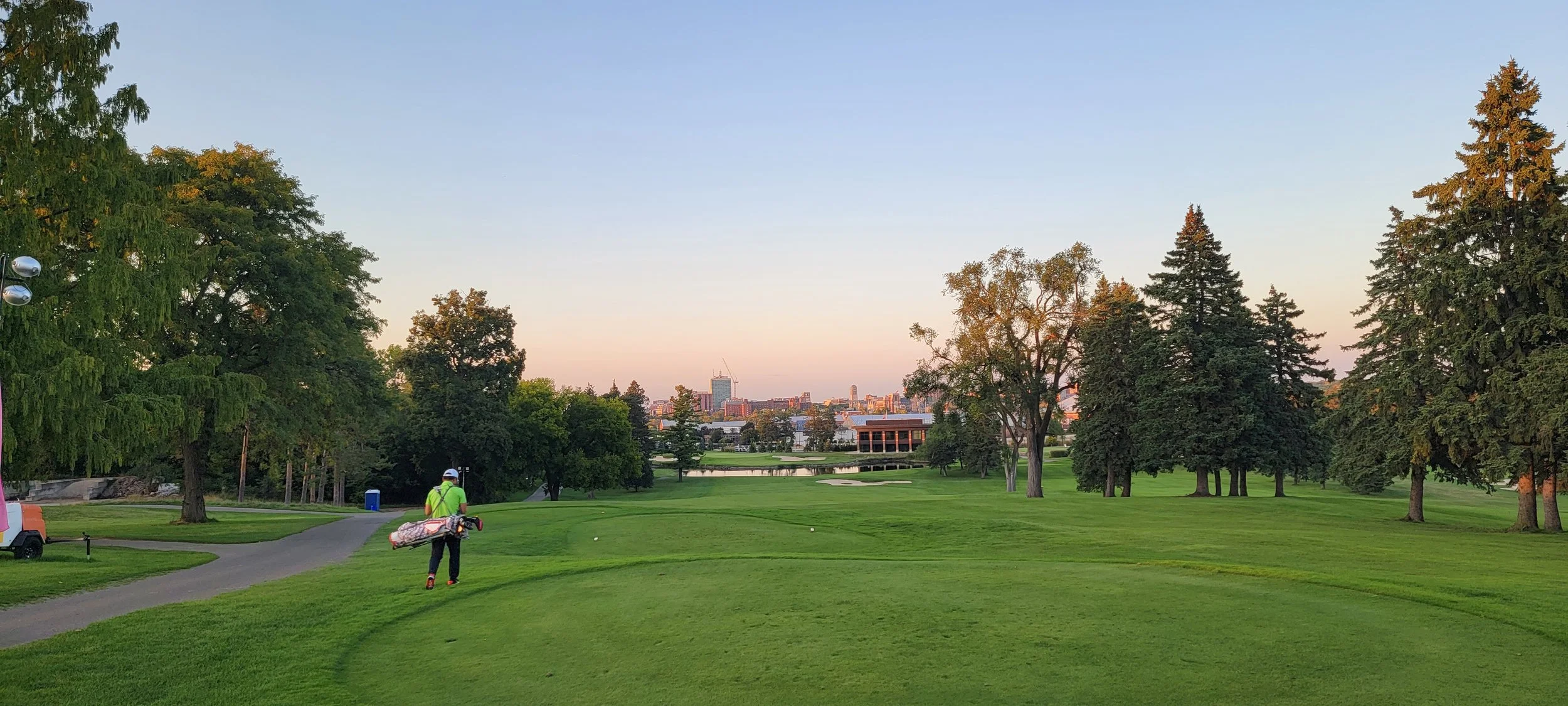
For Greener Golf, few places are as closely connected to our roots as the University of Michigan. We have worked with UM Golf Operations and the Athletic Department since 2012, and much of the foundation for what eventually became Greener Golf grew from research Parker Anderson conducted as a graduate student at Michigan. The University’s golf courses provided an early laboratory for thinking differently about golf; not simply as recreation, but as landscapes capable of supporting environmental stewardship, education, research, athletics, and community. That philosophy remains visible today. The UM Golf Course has expanded naturalized areas, implemented water-efficiency practices, composted organic material, participated in watershed-protection programs, and earned recognition through the Michigan Turfgrass Environmental Stewardship Program.
Perhaps nowhere is the idea of a multi-use golf landscape more apparent than at the University of Michigan Golf Course, known simply as the “Blue Course”, across the street from the Big House. Designed by Dr. Alister MacKenzie and opened in 1931, the course is simultaneously a historic work of golf architecture, home to Michigan’s golf and cross-country programs, green space within the city, and, on football Saturdays, part of one of the great traditions in college sports. When more than 100,000 people descend on Ann Arbor, portions of the golf course become parking and gathering space for fans headed to Michigan Stadium. The fairways that golfers walk during the week become a front porch for the University community; filled with cars, tents, tailgates, alumni, students, families, and friends before everyone makes the walk toward the Big House. The 2026 season is no exception, with the University Golf Course again serving as an official game-day parking location.
This year, however, the beginning of football season comes after an extraordinarily difficult season for the people who care for the Blue Course. Following vandalism to the golf course greens, the staff faced the monumental mid-season task of re-grassing the greens and their surrounds. For anyone who works in golf course management, it is difficult to overstate what that means: rebuilding some of the most intensively managed surfaces on a golf course while the growing season, golf calendar, weather, staffing demands, and expectations of golfers continue moving forward. It is a reminder that sustainable landscapes ultimately depend on people; the knowledge, patience, adaptability, and commitment of the crews who care for them every day.
As Michigan football begins another fall in Ann Arbor, there is an appropriate parallel between the team inside the Big House and the golf course staff working just outside it. Seasons rarely unfold exactly as planned. Adversity arrives, conditions change, and the measure of a team is often how it responds. We wish the entire Blue Course staff the very best as the golf course recovers and thank them for the extraordinary work required to get it there. Soon, thousands of Michigan fans will once again gather on MacKenzie’s fairways before kickoff; perhaps without realizing just how much work went into restoring the ground beneath their feet. That, in many ways, is the story of a great community landscape: resilient, adaptable, cared for, and capable of serving far more than a single purpose. Go Blue!