
The Attempted Santa Barbara Oil Tycoon
November 28th, 2025 • Parker Anderson
5 Minute Read
Parker Anderson’s opinion piece response to the Fried Egg article by Garrett Morrison about Phil Mickelson and his investment in Sable Offshore and their activities in Santa Barbara County.
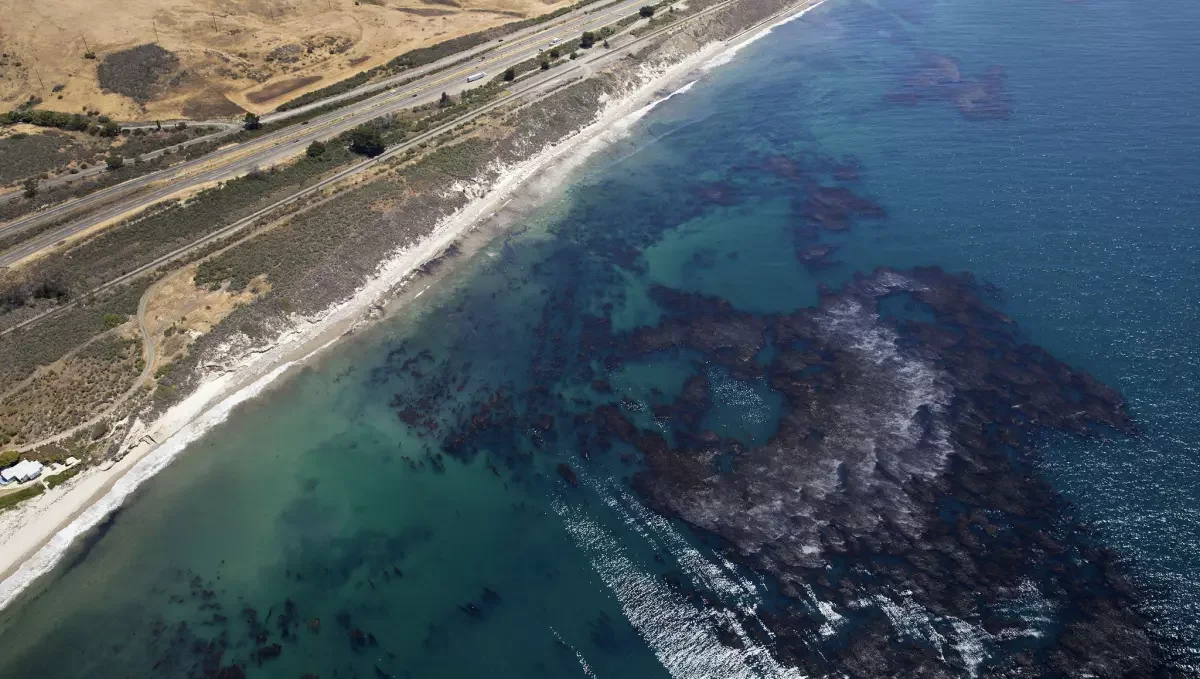
2015 Refugio oil spill, Santa Barbara, California. Photo Credit: Audubon
As a golfer born in the 1980s, I have witnessed the life and career of Phil Mickelson as a prominent thread in the fabric of golf culture and history. From the “you’re going to be a father” moment at Pinehurst, to his emotional first win at Augusta, to his historic victory at Kiawah in the PGA Championship. Always a showman, attempting risky dramatic shots and sharing thumbs ups and nods to the fans, you almost can’t help but root for the guy.
Unfortunately, Phil’s recent choices have complicated the admiration many of us once felt. To me, Phil’s biggest disappointment is not that he cut his PGA career short and sacrificed his legacy to start the LIV tour, but his outspoken support for and spread of misinformation about Sable Offshore, a company in which he holds a significant financial stake. Sable is currently seeking to reopen a deteriorating pipeline system and reactivate oil wells in the Santa Barbara Channel, despite extensive regulatory, environmental, and community concerns.
Phil claimed that enabling Sable Offshore would “Help Santa Barbara marine wildlife and cleaner beaches”. Anyone who lives by the Santa Barbara Channel knows that natural tar seeps have been part of this coastline for thousands of years. The oily substance we encounter is asphaltum, a naturally occurring material that has welled up from offshore reservoirs since long before the industrial era. The Chumash, the region’s native maritime people, used asphaltum for millennia to waterproof tomols (canoes), baskets, bowls, and tools. It has always been part of beach life here.
Most of us still end a beach day with the familiar tar-ball check and a quick wipe of the foot with coconut oil, but the idea that the solution to this small, well-understood inconvenience is more offshore drilling misses the point entirely. Oil and “clean” do not belong in the same sentence. Extracting oil has never been a pathway to cleaner ecosystems. It is an industry defined by spills, leaks, air pollution, and long-term climate impacts that place wildlife at far greater risk than a little asphaltum on your heels. Santa Barbara has lived through this before, from the 1969 blowout to the 2015 Refugio catastrophe. Our community knows what happens when oil infrastructure fails, and it has never resulted in cleaner beaches or healthier marine life.
Santa Barbara residents understand the consequences of continuing this obsolete exercise of oil extraction, which is why there is such strong opposition. Oil spills in Santa Barbara have resulted in the catalyzation of the global environmental movement and the foundation of Earth Day. And California is far from alone. Up and down the Atlantic Coast, states like Florida, Georgia, and South Carolina have all opposed new federal offshore leasing because their coastal economies, fisheries, and tourism industries depend on clean water and healthy ecosystems. In 2020, the federal government issued a temporary moratorium on new offshore oil and gas leases through 2032. Offshore drilling is unpopular not because of ideology, but because coastal communities everywhere understand what they stand to lose when billion-dollar oil companies pursue short-term gains in their community.
U.S. multinational fossil fuel corporations are fighting tooth and nail to stay alive and they have powerful “friends” in politics and media who tend to repeat the same talking point: that the only way to strengthen American energy production is to loosen regulations and drill more. But that is simply not true. Of the roughly $3.3 trillion invested in global energy today, about $2.2 trillion is flowing into renewables, and much of that investment is happening outside the United States. Other countries are racing ahead, building the clean-energy infrastructure that will define the next century, while we cut hundreds of millions of dollars in renewable projects that would significantly expand domestic energy output and create jobs just as reliably as any oil rig. Are we (Americans) going to be left squabbling over poor quality crude oil in our last remaining beautiful places while the world evolves into a renewable energy future? Or are we going to take advantage of existing (and in many cases already cheaper) renewable energy alternatives and give our children a chance in this world? As a new dad, the question of what the future will be like is something that both haunts me and at the same time gives me hope.
In his Fried Egg article, Garrett Morrison shared his perspective on deregulating oil production. I appreciate his honesty, but I think this is where the broader conversation often goes astray. “Freeing up domestic energy” does not have to mean sacrificing coastlines or doubling down on obsolete extraction methods. It can, and should, mean investing in cleaner technologies that will power the next several generations, not clinging to the fossil-fuel systems that defined the last hundred years. Regulation exists because fossil fuel extraction has a long, painful track record of spills, blowouts, and environmental damage. We do not have many pristine natural areas left, and if we truly want energy security, we should be closing the gap between the subsidized price of oil and its real cost while accelerating the transition toward solar, wind, geothermal, and other novel renewable systems that already outcompete fossil fuels in cost.
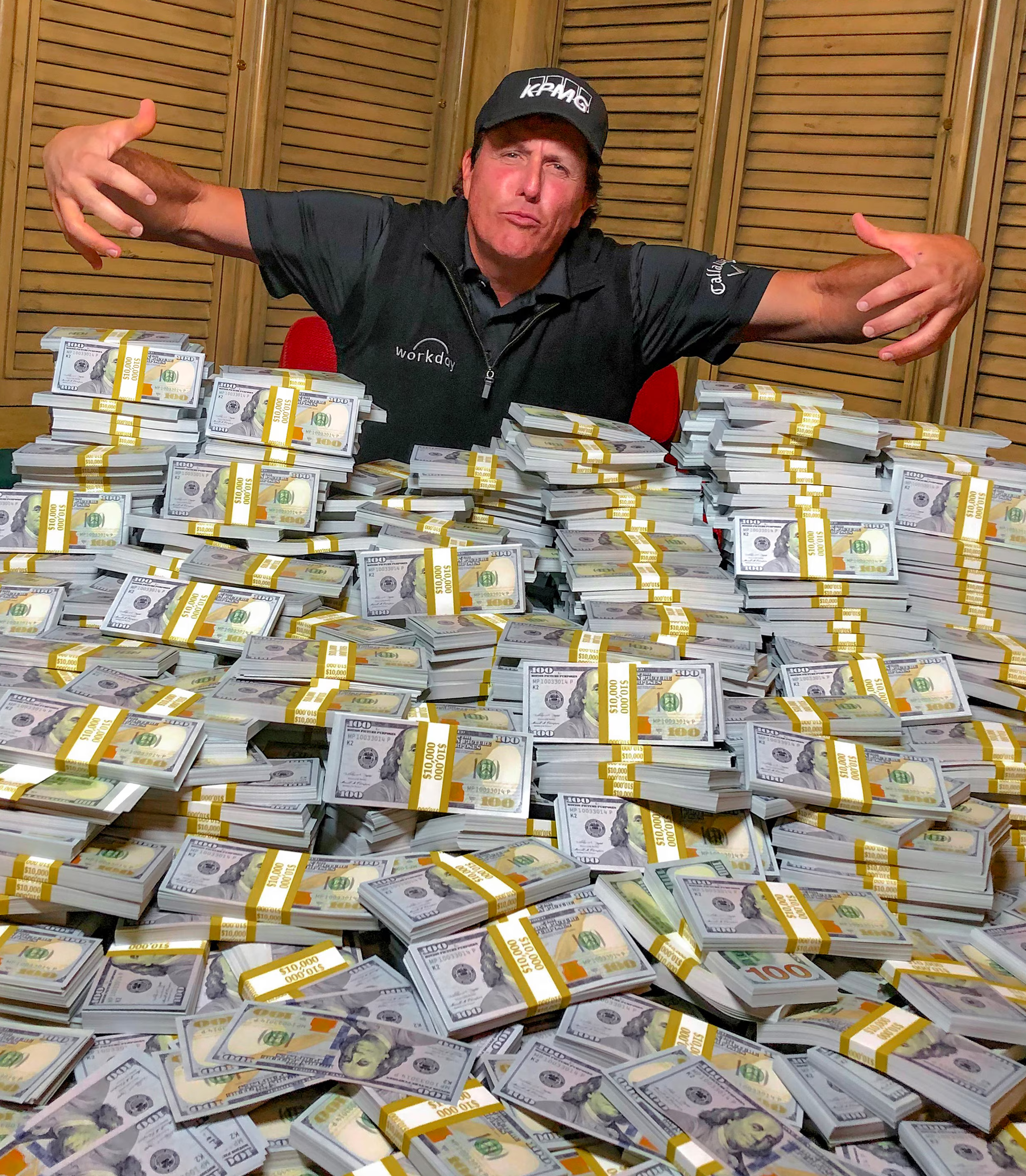
Photo Credit: Bleacher Report
Whether he realizes it or not, Phil Mickelson’s stance reflects a familiar mindset, the idea that humans stand apart from nature rather than within it, and that the natural world exists primarily as a resource to extract from and exploit for personal gain. But none of us are separate from the ecosystems that support our lives. Healthy communities, healthy economies, and healthy people all depend on healthy environments. The consequences of ignoring that reality are no longer theoretical, they are unfolding all around us. Phil’s push to lower fuel costs for Californians rings hollow when he stands to personally profit from the success of Sable, a company already with a troubled history. That is not public advocacy, it is self-interest dressed up as concern. And when the stakes involve our coastline, our wildlife, and our climate future, that kind of rhetoric is more than misguided, it is blatantly dishonest.
I’ve always cheered for Phil, whose talent and charisma inspire so many of us to pick up a club in the last few decades. Golf, at its best, teaches humility, patience, and a respect for the natural conditions and ecosystems that shape every course. And just as great golf requires working with the land rather than against it, a sound investment requires understanding how it interacts with the ecosystem and community it inhabits. I hope Phil finds his way back to those fundamental lessons, because the future of both the game and our communities depends on learning to work with nature, not exploit it. The cost of fuel is far more than what appears on a receipt at the pump. Its true price is paid in our air, our water, our wildlife, and the stability of the world our children will inherit. I hope we continue choosing an energy future they will thank us for, not one that locks them deeper into the harms of a fading fossil-fuel past.